Our professional service team often sees owners struggle with Building a Full-Funnel Digital Marketing Strategy for Local Businesses. They run a Google Ad campaign over here and post on Facebook over there. These isolated tactics always result in wasted budgets and wildly inconsistent messaging.
We know that a full-funnel strategy solves this exact problem by aligning every activity to a specific stage of the buyer journey. Recent data from Neil Patel’s 2025 marketing report shows the average consumer now requires 11.1 touchpoints before making a purchase. Every channel must serve a defined purpose so your marketing compounds rather than competes with itself.
Our goal is to break down the three main funnel stages and provide a practical framework to build a system that actually converts.
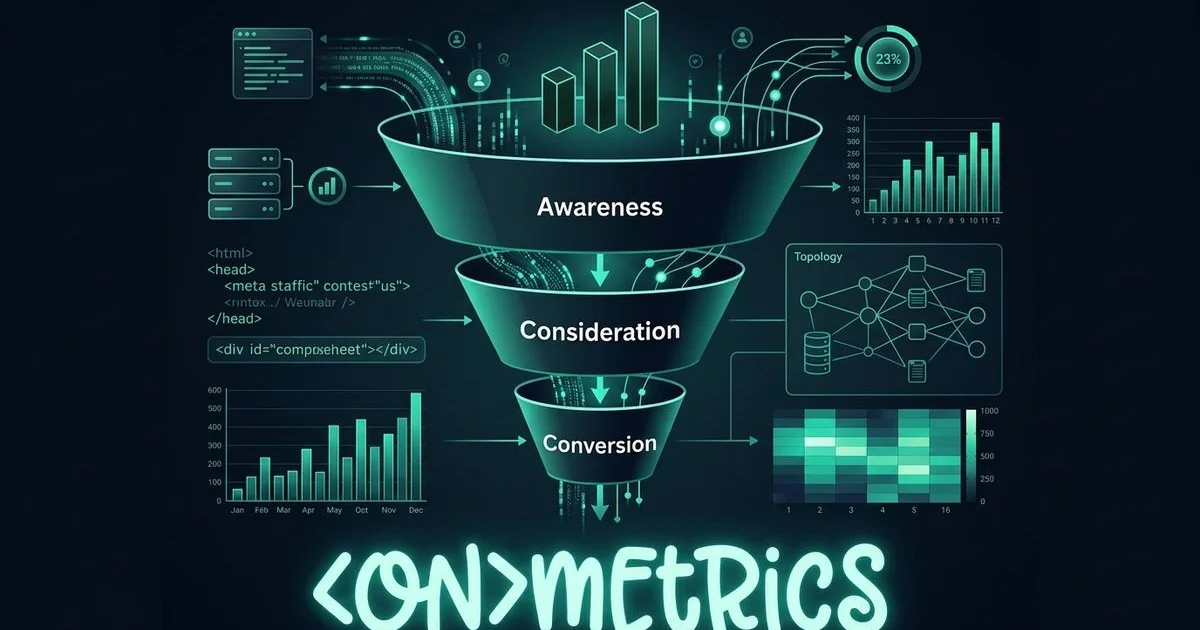
Understanding the Three Funnel Stages
We group the customer journey into three distinct phases to make tracking manageable. Prospects move from realizing they have a problem to actively comparing local providers. The right message at the wrong time will simply be ignored.
Top of Funnel: Awareness
Our initial goal at this stage is pure visibility among people who will eventually need your services. Potential customers are just recognizing a problem and have not started actively searching for solutions. SEO and Content Marketing act as your primary awareness engines.
We build our SEO services specifically around this kind of intent-driven content strategy. A 2024 study by Sagapixel found that 46% of all Google searches now have local intent. Someone in London searching “why is my furnace making a banging noise” has a problem but has not decided to hire anyone yet.
Our approach ensures that your educational content answers their question first. Top awareness channels to deploy include:
- Informational blog posts targeting specific local problems.
- Community sponsorships like supporting a London Knights game.
- Educational social media content to build early familiarity.
We often deploy targeted Facebook campaigns to introduce brands to homeowners within a 25 km radius of London. Markage’s 2025 data reveals that 94% of Canadian small businesses post on social media at least once a month. The key is to educate and build familiarity rather than pushing for an immediate sale.
Our final awareness tactic involves local public relations and community involvement. Sponsoring a London Knights game or participating in local events builds vital brand recognition. Your business becomes the first one people think of when an active need finally arises.
Middle of Funnel: Consideration
Our focus shifts to building trust and differentiation once prospects enter the consideration stage. They have identified their problem and are actively evaluating which provider is the best fit. Case Studies and Testimonials become powerful assets right now.
We know that real reviews from actual customers provide social proof that easily beats generic sales copy. A 2024 Backlinko report shows that 76% of people who find local helpful information in search results are more likely to visit physical stores or book services. A detailed case study showing how you solved a similar HVAC problem in London can tip the decision in your favour.
Our team heavily relies on Comparison Content to address the evaluation mindset directly. Posts like “How to Choose an Accountant in London Ontario” naturally guide readers to your solution. This format matches commercial investigation intent perfectly.
“The average local decision timeline spans 2 to 8 weeks, making persistent middle-of-funnel nurturing absolutely essential for growth.”
We use Email Nurturing to keep your business top-of-mind for leads who are not ready to buy today. Campaign Monitor’s 2025 benchmarks show that email marketing delivers an average return of $36 per $1 spent, with open rates hitting 22.7%. A well-crafted sequence builds a relationship over time.
Our Retargeting Ads bring these consideration-stage prospects back to your website. Recent 2026 data from Marketing LTB shows that retargeted website visitors are 70% more likely to convert. A targeted campaign on Google Display can re-engage them with a specific customer testimonial or a time-limited offer.
Bottom of Funnel: Conversion
Our primary goal at the conversion stage is removing friction for buyers ready to take action. Potential customers have decided they need a service like yours and want the easiest path forward. Google Ads represent the quintessential conversion-stage channel.
We place your business right in front of people searching for terms like “emergency plumber London Ontario”. LocaliQ’s 2026 benchmark report found that the average conversion rate for home services search ads sits at a strong 7.33%. You can learn more about how we structure high-conversion PPC campaigns to capture this high purchase intent.
Our CRO services ensure that the traffic you generate actually turns into paying customers. Essential CRO improvements include:
- Simplifying complex contact forms to just name, email, and phone number.
- Adding highly visible click-to-call buttons for mobile users.
- Testing different landing page layouts to find the highest converting design.
A modest conversion rate improvement from 3% to 5% dramatically increases leads without spending another dollar on ads.
We also prioritize Click-to-Call and Online Booking to reduce friction for mobile users. StatCounter data from late 2024 confirms that mobile accounts for 64.04% of the search market share in Canada. Making your phone number clickable significantly boosts conversions since many searchers prefer calling over filling out a web form.
Our final tactic is Remarketing with Urgency to capture visitors who showed strong intent but left. A prospect viewing your pricing page is extremely close to making a final choice. A targeted ad offering a 10% discount for booking this week provides the final nudge needed to close the deal.
How the Stages Work Together
Our data proves that the real magic of a full-funnel strategy happens when each stage feeds the next. Here is a concrete example for a landscaping company in London, Ontario.
| Funnel Stage | Customer Action | Marketing Touchpoint |
|---|---|---|
| Awareness | Homeowner searches “fix patchy grass Ontario”. | Reads your educational blog post on Southern Ontario lawn care. |
| Consideration | Two weeks later, they browse Facebook. | Sees your retargeting ad featuring a Byron lawn renovation case study. |
| Conversion | A week later, they search “landscaping London Ontario”. | Clicks your Google Ad and submits a quote request due to brand familiarity. |
We regularly see Google Ads get all the credit under outdated last-click attribution models. The blog post actually created the awareness and the retargeting ad built the vital trust. The conversion might never have happened without those earlier touchpoints.
Our team emphasizes proper attribution for this exact reason. Mapping these multi-touch journeys is simple with ONclix and our data visualization tools. You can clearly see how each stage contributes to revenue and allocate your budget accordingly.
Building a Full-Funnel Digital Marketing Strategy for Local Businesses: A Practical Framework
We follow a specific five-step framework to build these systems for Canadian companies. This proven process prevents wasted effort and keeps your messaging perfectly aligned.
Step 1: Map Your Customer Journey
Our first step is always mapping the typical path your customers take before purchasing. You must talk to recent clients and ask what they researched before contacting you. Ruler Analytics published 2025 data showing that 67% of customers now prefer self-service research over speaking to a company representative early on.
We use these insights to pinpoint exactly where to focus your marketing efforts. Finding out what almost stopped them from buying reveals your biggest friction points.
Step 2: Assign Channels to Stages
Our next move is assigning each marketing channel to its primary funnel stage based on your specific map. Not every business needs to use every single platform available. A local law firm might rely heavily on SEO for awareness, while a restaurant leans on Instagram.
| Business Type | Awareness Channel | Consideration Channel | Conversion Channel |
|---|---|---|---|
| Law Firm | Informational SEO Articles | Detailed Case Results | Google Search Ads |
| Restaurant | Instagram & Local PR | Google Reviews | Google Maps Profile |
| HVAC Service | YouTube Repair Tutorials | Customer Testimonials | Local Service Ads |
We ensure your budget flows smoothly into the channels that naturally fit your industry. This prevents you from forcing a strategy that simply does not work for your audience.
Step 3: Create Content for Each Stage
Our writers then develop specific content that serves each distinct stage of the journey. Awareness content educates the reader, while consideration content differentiates your brand. Conversion content exists solely to persuade a ready buyer.
We constantly see businesses make the mistake of only creating bottom-of-funnel conversion materials. A 2025 Coalition Technologies report notes that 74% of B2B marketers report higher lead volumes simply by investing in early-stage content marketing. You simply cannot close people who never entered your funnel in the first place.
Step 4: Connect the Stages with Tracking
Our technical team implements tracking that follows a prospect from their very first touch to the final sale. UTM parameters, call tracking, and multi-touch attribution ensure you understand the complete picture. Running a marketing funnel blind is a guaranteed way to waste money.
We configure these systems to show exactly how each stage contributes to your bottom line. Data gives you the confidence to scale winning campaigns and cut losing ones quickly.
Step 5: Optimize Based on Data
Our final ongoing step is reviewing your funnel performance data every single month. Finding exactly where prospects drop off the path dictates your next move. Quimby Digital’s 2025 benchmarks show that simply A/B testing and refreshing ad creatives every 3 to 4 weeks can raise click-through rates by up to 40%.
We ask hard questions about whether your awareness content is actually attracting the right local audience. The numbers will clearly tell you where to invest more capital and where to improve your messaging.
The Competitive Advantage of Full-Funnel Thinking
Our experience shows that most local businesses in London, Ontario run completely disconnected tactics. An occasional blog post here and a random Google Ad there will never drive sustainable growth. Companies that build a coordinated strategy gain a massive structural advantage because their marketing efforts actually compound over time.
We want to help you move away from fragmented tasks and build a cohesive system. Every single piece of content, ad, and optimization should work together in harmony. If you are ready for a real change, contact ONmetrics to discuss Building a Full-Funnel Digital Marketing Strategy for Local Businesses today.