We hear this question constantly from homeowners expanding their services and local operators scaling up. Deciding between PPC vs SEO: Which Should Your London Business Invest in First? is a major crossroads.
Our professional service team has guided countless companies through this exact choice over the years. The answer rarely comes down to a simple coin flip.
We have noticed the dividing line is usually your timeline for needing fresh revenue.
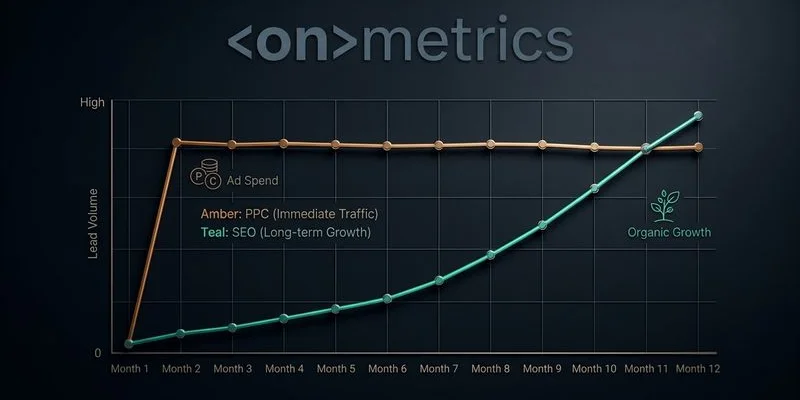
Organic search builds a massive asset over time, while paid ads offer instant visibility at a premium price. Let’s explore a few practical ways to respond and map out a realistic path forward.
How PPC and SEO Differ
Before weighing your options, you need a clear picture of the mechanics behind each channel.
Google Ads (PPC) Defined
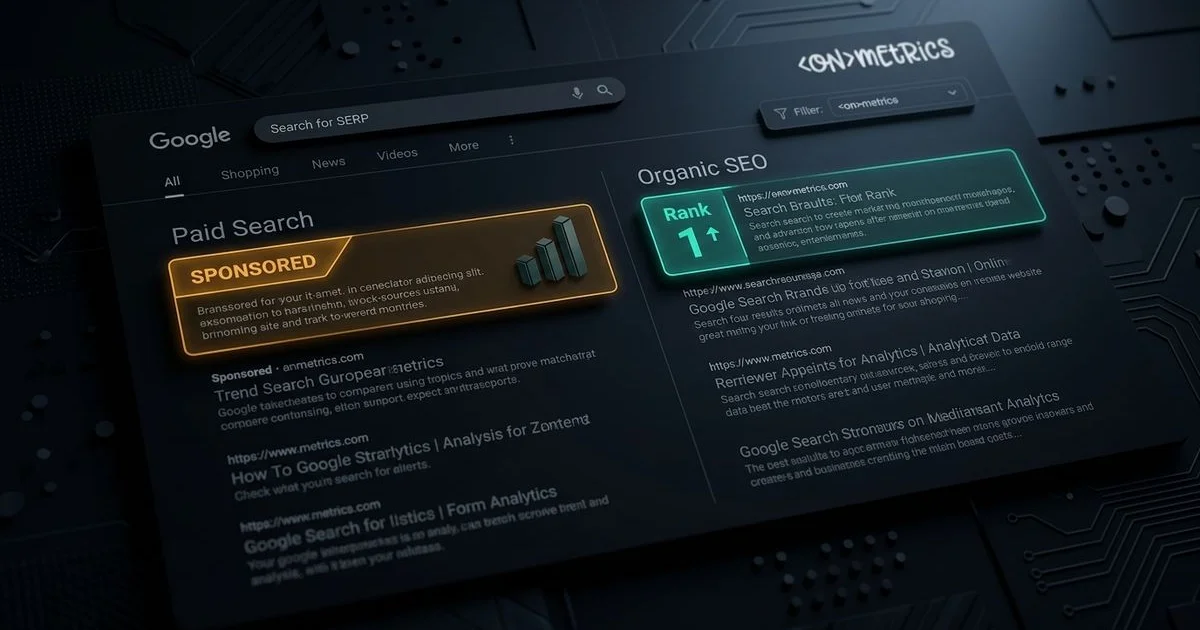
We define PPC as renting premium space at the top of search results. You bid on specific keywords and pay Google a fee every time a user clicks your link.
Our strategy grants you immediate access to potential buyers within hours of launching a campaign. Stop paying, and your visibility vanishes instantly.
We closely monitor automated systems like Google Performance Max. These tools distribute your ads across multiple Google properties, requiring careful budget management to avoid wasted spend.
Search Engine Optimization (SEO) Defined
Our approach to SEO involves building long-term digital authority so search engines rank your site naturally. This requires a mix of technical website improvements, high-quality content creation, and earning links from trusted sites.
We look to 2026 data from Resourcera, which shows the median ROI for organic search campaigns hits roughly 748% over a 24-to-36-month period. This compounding growth turns your website into an independent lead generation machine.
“Think of PPC as renting a high-traffic billboard, while SEO is building a highly sought-after storefront.”
The Case for Starting With PPC
Investing in paid advertising makes the most sense if your business needs immediate traction.
Our data shows that certain situations demand the speed of Google Ads.
- You need leads this week. Launching a new location requires fast revenue, and PPC delivers traffic within days.
- You want to test your messaging. Running paid ads lets you discover exactly which keywords convert before you spend months building content around them.
- Your market is highly seasonal. Landscapers and HVAC technicians can turn ad spend up during peak months and pause it during the off-season.
Google Local Services Ads provide a brilliant workaround for service providers facing entrenched competitors. Our experience shows these specific ad units place your business right at the top with a “Google Guaranteed” badge, charging you per lead rather than per click.
Home services businesses in Canada saw an average cost per click of $7.85 in 2025, according to recent LocaliQ benchmarks. We recommend developing a solid, targeted strategy to ensure those expensive clicks turn into paying customers.
The Case for Starting With SEO
Building organic visibility requires patience, but it delivers an exponentially better return on investment.
Our clients who commit to a six-month organic strategy consistently lower their overall customer acquisition costs. A 2025 study by Digidop highlights a critical concept called the “valley of death” for new websites. We know that early ROI might look negative for the first few months, but profitability typically reaches a massive tipping point around the 30-month mark.
Here is why organic growth should be your primary focus:
- You secure compounding value. Every new ranking generates free clicks, meaning your cost per lead drops significantly as traffic scales.
- You build community trust. BrightLocal’s 2026 survey revealed that 74% of consumers specifically seek out reviews written in the last three months, and organic results carry more inherent credibility than sponsored links.
- You bypass high click costs. Competitive fields like legal services in Ontario can see ad clicks exceed $50 each, making organic traffic a mandatory financial strategy.
Our team strongly suggests using Google Analytics 4 (GA4) to properly measure this growth. This platform uses data-driven attribution to show exactly how organic content assists in final conversions, proving the true value of your investment.
Comparing the Numbers
Looking at hard data helps clarify the financial commitment required for both paths.
Our team has compiled realistic benchmarks for service businesses operating in Ontario.
| Factor | PPC (Google Ads) | SEO |
|---|---|---|
| Time to initial break-even | 1 to 7 days | 6 months (Technical SEO) |
| Average Monthly Cost | $1,500 to $5,000+ | $1,000 to $3,000 |
| Traffic Longevity | Drops to zero if paused | Continues for months |
| Expected Conversion Rate | Averages around 7.3% | Often exceeds 14% |
| Targeting Strategy | Intent-based bidding | Hyperlocal content focus |
These figures highlight the stark contrast in timelines and cost structures.
We always advise looking beyond just the initial monthly fee. A niche local service might rank naturally within a few weeks, while highly contested markets demand a much longer timeline.
The Smart Approach: Both Together
The most successful companies do not choose just one method.
Our most effective campaigns blend both channels into a unified strategy. You can use paid ads to generate quick cash flow while simultaneously laying the groundwork for long-term organic dominance.
Phase 1: Launch Ads and Fix Technical Foundations
Our initial phase dedicates the organic budget to technical site repairs, adding schema markup (structured data), and optimizing your Google Business Profile. Deploying Google Ads brings in immediate revenue during your first three months.
Phase 2: Refine Bids and Accelerate Content
We use the data from your paid campaigns to reveal exactly which search terms generate the best phone calls by month four. Those proven keywords should guide your new blog posts and service pages.
Phase 3: Shift the Financial Balance
Our strategy involves gradually reducing your ad spend on the keywords you now rank for naturally. Organic rankings will start driving consistent traffic by the end of your first year.
Redirecting those freed-up funds toward entirely new service lines maximizes your reach. We set up our partners for success using this exact hybrid model. You can explore the details of our PPC management and SEO services to see how these methods overlap.
Questions to Help You Decide
Answering a few direct questions will quickly clarify your next steps.
Our initial strategy sessions always start with these specific evaluations.
- Do you require leads in the next two weeks? Launching a paid campaign is your only realistic option.
- Is your website actually ready for traffic? Sending expensive paid clicks to a slow site is a massive waste of money. You must fix your web design and technical issues first.
- Can you handle a six-month commitment? Organic growth requires steady effort, but it eventually outperforms every other channel.
- How are your competitors acting? If another company holds the top organic spots, running ads allows you to leapfrog them instantly.
- Are you tracking local reviews? Tools like Whitespark or BrightLocal are essential for managing the community feedback that drives local search rankings.
We tell business owners that a budget under $1,000 a month should strictly go toward organic content. Budgets above $2,500 open the door to a blended approach.
PPC vs SEO: Which Should Your London Business Invest in First?
There is no single formula that works perfectly for every company.
Your specific market competition and available cash flow should always dictate the right path.
We encourage you to analyze your immediate needs before committing your marketing budget. Taking a deliberate look at your data removes the guesswork from this decision.
If you want a professional perspective on your current digital footprint, contact us for a free consultation. Our experts will map out a customized plan that aligns with your specific growth targets.